Review · SAIGON TOURS
Hands-on making 3 Iconic Coffees of South Central North Vietnam
Vietnam’s regional character comes into focus one cup at a time in this hands-on workshop with Quynh. You make four drinks, from slow-brewed phin coffee to Hanoi egg coffee, while learning how coffee preferences connect to life in the south, central Vietnam and the north.
I like two things especially: you get to make each coffee yourself, and Quynh explains the choices behind the ingredients rather than treating the drinks as recipes alone. The one consideration is the tight 90-minute schedule: this is a compact introduction, not a long coffee course.
What makes this coffee workshop worth your time
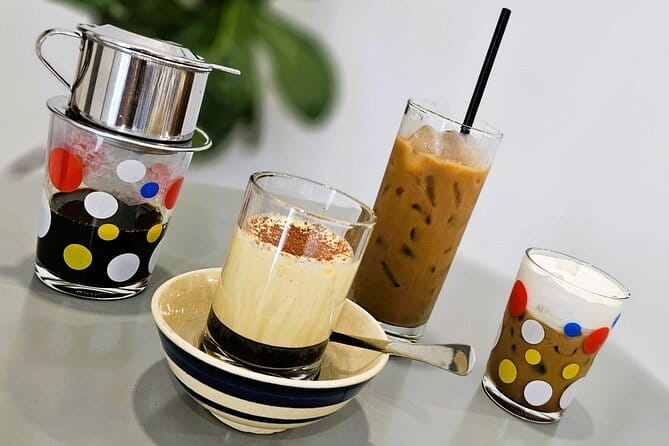
- Four distinct drinks: Make phin coffee, condensed-milk coffee, salted cream coffee and egg coffee.
- A useful technique lesson: Quynh demonstrates a wrong phin method alongside the right one so you can taste the difference.
- Regional context with each recipe: The drinks are linked to the south, central Vietnam and the north.
- A small group: The workshop accepts no more than six people, giving the hands-on format room to work.
- A central meeting point: Start and finish at 27 Ngô Đức Kế in District 1.
- Good value for a short activity: At $21.69 per person, coffee, ingredients, equipment and cashew nuts are included.
Four cups, three regions, one compact lesson

This workshop’s appeal is not just that you get to drink four Vietnamese coffees. It gives you a way to compare them. Quynh connects a drink’s ingredients and preparation to regional preferences, then lets you test the results yourself. That makes the cultural discussion easier to remember than a string of dates or facts.
Quynh brings 16 years of food-and-beverage experience to the session, along with an interest in history and culture. The format is personal and practical: he explains, demonstrates, and then hands over the tools so you can make the coffee. It suits you if you like learning by doing, but you do not need to arrive with coffee-making experience.
The session lasts about 90 minutes and takes place at 27 Ngô Đức Kế in Bến Nghé, District 1. It ends back at the same meeting point, which makes it a manageable city activity to fit around other plans. The group is capped at six, a useful limit when everyone is taking turns with equipment and asking questions.
A few more Ho Chi Minh City tours worth a look
- Cu Chi Tunnels Tour from HCM City – Morning or Afternoon
★ 5.0 · 15,833 reviews - From HCM City: Mekong Delta Tour with Sampan Journey
★ 4.5 · 13,132 reviews - Ho Chi Minh City Street Food Tour & Sightseeing By Motorbike
★ 5.0 · 9,413 reviews
Start with phin coffee and the wrong way to brew it
The workshop begins with a brief history of Vietnamese coffee culture, then moves to the phin, the small filter used to make coffee slowly. You practise the method with Quynh’s guidance rather than simply watching him prepare a cup. That distinction matters: knowing the steps is one thing, but seeing how a change in technique affects the taste is easier to grasp when you make the drink yourself.
Quynh also prepares an intentionally incorrect sample. Comparing it with a properly made phin coffee gives you a direct lesson in what the method is meant to achieve. It’s a smart teaching trick: a mistake you can taste tends to stick in your mind longer than a list of rules.
This first section also gives you a foundation for the rest of the class. The phin method is not just one more recipe; it helps you understand the role of preparation in the drinks that follow. You can ask questions and adjust your approach as you go, which is more useful than leaving with a recipe you have never tried.
The workshop includes the coffee and equipment, so you do not need to bring supplies. If you already enjoy Vietnamese coffee, the comparison may give you a better sense of how technique changes the cup. If this is your first close look at a phin, the demonstration makes the brewing process approachable.
Condensed milk coffee puts Saigon in the cup
Next comes the famous Vietnamese coffee with condensed milk, presented as a southern style associated with Saigon. Quynh explains how the ingredients work together and what the drink suggests about the region’s preferences. The point is not to claim that one cup represents every person in the south, but to use a familiar drink as a starting point for discussing how tastes vary across Vietnam.
You make the coffee yourself, so you can pay attention to the balance of strong coffee and sweetness. Quynh also explains how to adjust the drink to suit your own taste. That practical advice is a real benefit if you want to recreate the recipe after the workshop instead of simply remembering that you liked it.
The session is designed to help you understand the relationship between ingredients and regional style. You are not just following instructions; you are learning why a particular combination has become associated with one part of the country. That makes this section useful for curious eaters as well as coffee fans.
Salted cream coffee brings in central Vietnam
The third drink is modern salted cream coffee, linked to central Vietnam. Its place in the workshop offers a contrast with the phin and condensed-milk styles: you move from a traditional brewing method and a widely known southern drink to a newer regional favourite.
Quynh walks you through the ingredients and the tricks involved in making it. The hands-on format gives you a chance to see how the components come together rather than treating the drink as a mystery prepared behind a counter. You can also think about how its flavour differs from the coffees you have already made.
The cultural framing is part of what makes this stop more than a recipe demonstration. Quynh uses the drink to show how coffee preferences can reflect the character and circumstances of a region. The details are best approached as a thoughtful introduction, not a complete account of central Vietnam’s food culture. In 90 minutes, you get a taste of the connection, not an exhaustive history.
Or get out of the city for a while:
- HCM: Cu Chi Tunnels-Tapioca Small Group Tour Morning or Afternoon
★ 5.0 · 7,485 reviews - Cu Chi Tunnels and Mekong Delta Signature Tour
★ 5.0 · 7,328 reviews - Mekong Delta Guided Tour from Ho Chi Minh City
★ 4.5 · 7,192 reviews - Cu Chi Tunnels & Mekong Delta Tour with VIP Limousine Transfer
★ 5.0 · 7,052 reviews
Finish with Hanoi egg coffee
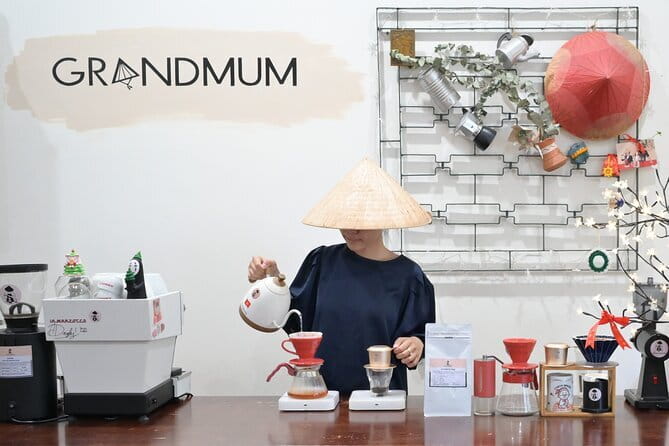
The final featured drink is Hanoi’s egg coffee, described as an unusual coffee with a strong connection to the capital. Quynh explains how it is made and how its ingredients fit into the story of northern Vietnam. By this point, you have three regional examples to compare, which helps the main idea of the workshop come together.
Egg coffee is also a good reason to take the class even if you already know the more familiar Vietnamese iced coffee. The recipe is distinct, and making it yourself gives you a closer look at how the drink is assembled. Quynh connects the preparation to the character of Hanoi, inviting you to consider how a city’s tastes can become part of its identity.
You finish with four coffees in your tasting and making experience: the phin brew, condensed-milk coffee, salted cream coffee and egg coffee. The workshop includes all ingredients and equipment, plus cashew nuts, another well-known Vietnamese product. Do not expect a full meal; the stated snack is cashews.
A small attic workshop keeps the class personal
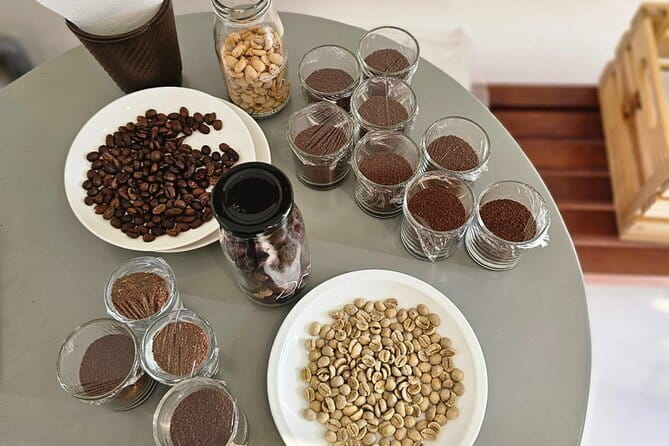
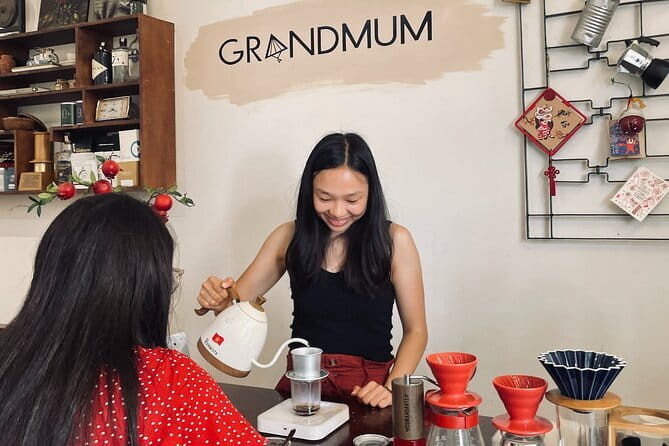
The setting is an attic workshop, with tables and coffee-making accessories arranged for the session. That practical layout matters more than fancy surroundings in a class like this. You want space to follow the demonstration, handle the equipment and taste the results without feeling lost in a crowd.
With a maximum of six participants, the group is small enough to support a more conversational lesson. You have a better chance to ask about a step or a flavour while you are making the drinks. It also means this is not a large, polished café show. The focus is on the host’s explanations and your own participation.
Quynh’s storytelling is central to the experience. His food-and-beverage background gives him a practical grasp of coffee preparation, while his interest in history and culture shapes the way he links the drinks to Vietnam’s regions. If you enjoy hearing the reasoning behind a dish or drink, that mix should suit you.
The workshop is listed as near public transportation, and service animals are allowed. The meeting point is in central District 1, and the activity returns there at the end. Confirmation is provided at booking, and the ticket is mobile, so you do not need a printed ticket.
Is $21.69 good value for 90 minutes?
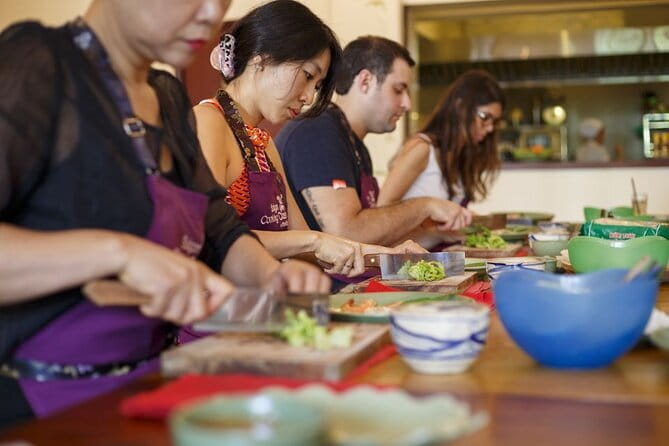
At $21.69 per person, the price covers a guided 90-minute session, four coffees, ingredients, equipment and cashew nuts. You are paying for more than four tastes: the hands-on instruction and the regional explanations are the parts that give the activity its value. For someone who wants to understand Vietnamese coffee rather than order another cup and move on, that is a fair package.
The value depends on what you want from the hour and a half. If you are looking for a full meal, a long café crawl or a detailed survey of Vietnam’s history, this is not the right fit. If you want a compact activity where you can practise techniques and connect specific drinks to regional culture, the price is easier to justify.
The workshop is booked, on average, about 14 days ahead. That is a helpful planning signal if you have a fixed schedule, though it does not guarantee any particular date will be available. You can cancel for a full refund up to 24 hours before the start time; changes or cancellations inside that window are not accepted.
Who should book this workshop?
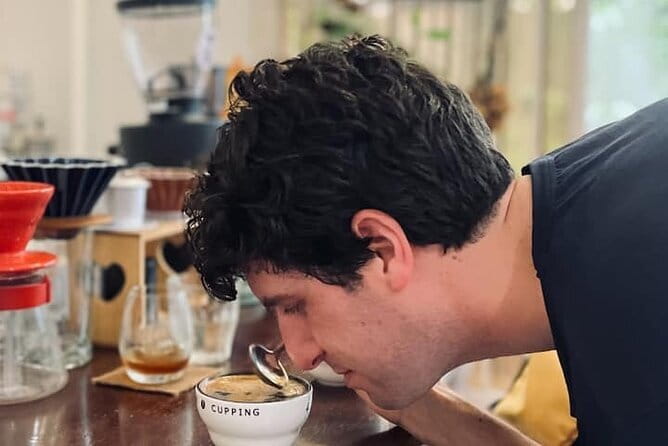
I would put this on the list for anyone curious about Vietnamese coffee, especially if you prefer an activity that asks you to take part rather than sit and listen. It is also a good choice for a first visit to Ho Chi Minh City: the southern coffee gives you a local point of reference, while the central and northern drinks broaden the picture beyond the city.
It should work well for coffee drinkers who want to learn a repeatable method and for culture-minded visitors who enjoy connecting food with place. You do not need specialist knowledge. The lesson starts with a short history and practical instruction, then builds through the four drinks.
It may be less satisfying if you want a long technical class on beans, roasting or coffee production. Those subjects are not part of the stated programme. The emphasis here is on preparation, taste, ingredients and the regional meanings Quynh draws from each drink.
A separate four-hour electric tuk-tuk tour across the city, focused on urban growth through coffee drinks, is also available from the host. That is a different, longer experience; the workshop reviewed here stays at the meeting point and takes about 90 minutes.
Should you book?
Book this if you want to make Vietnamese coffee with your own hands and leave with a clearer sense of how four drinks connect to the country’s regions. Quynh’s approach combines practical steps with culture and storytelling, and the six-person cap keeps the lesson small. Skip it if your priority is a full meal, a broad city tour or an advanced technical course. For the price, it is a useful, focused way to spend an hour and a half in District 1.
FAQ
How long does the coffee workshop last?
It lasts approximately 1 hour and 30 minutes.
Where does the workshop start and finish?
It starts and ends at 27 Ngô Đức Kế, Bến Nghé, District 1, Ho Chi Minh City.
Which coffees will I make?
You will make phin coffee, Vietnamese coffee with condensed milk, salted cream coffee and Hanoi egg coffee.
Do I make the coffees myself?
Yes. The workshop is hands-on, and you make the drinks with the host’s explanations and instructions.
How many people can join?
The maximum group size is six travelers.
What is included in the price?
Coffee, tea, ingredients and equipment for the drinks are included, along with cashew nuts.
Is the workshop suitable for someone new to Vietnamese coffee?
The session includes a brief history and hands-on instruction, including a demonstration of the right and wrong ways to make phin coffee. No prior experience is stated as a requirement.
Can I cancel for a refund?
You can cancel at least 24 hours before the experience starts for a full refund. Cancellations or changes made less than 24 hours before the start time are not accepted.
Fresh on the list for Ho Chi Minh City
- Private Cu chi Tunnels and Mekong Delta 1 Day★ 4.5 · 6 reviews
- Private Cu Chi Tunnels tour by Luxury Speedboat★ 5.0 · 36 reviews
- Cu chi tunnels Tour (Group and Private)★ 5.0 · 4 reviews
- Private Cu Chi Tunnels and Mekong Delta full day★ 5.0 · 4 reviews
- Private Cu Chi Tunnels Tour Half Day★ 5.0 · 3 reviews
- Cu Chi Tunnels and Mekong Delta 1 Day★ 5.0 · 19 reviews
- Cu Chi Tunnels Private Shore Excursion – Less Tourist Route★ 5.0 · 10 reviews
- Private Cu Chi Tunnels and Mekong Delta: Full-Day Guided Tour★ 4.0 · 29 reviews
Saigon Tours, compared.
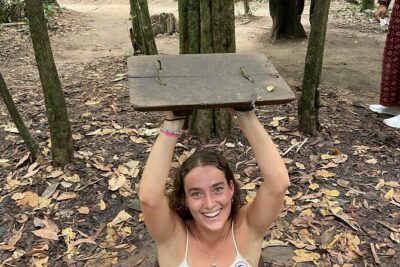
Cu Chi Tunnels Tour from HCM City – Morning or Afternoon
Read our review →
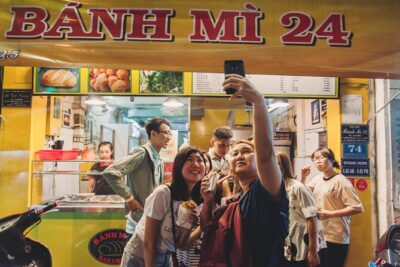
Ho Chi Minh City Street Food Tour & Sightseeing By Motorbike
Read our review →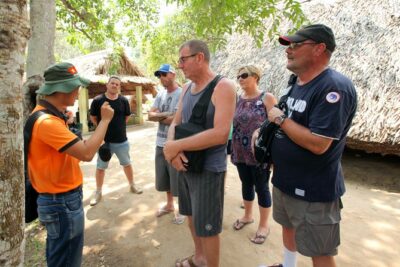
Cu Chi Tunnels-Tapioca Small Group Tour Morning or Afternoon
Read our review →
Cu Chi Tunnels and Mekong Delta Signature Tour
Read our review →
Mekong Delta Guided Tour from Ho Chi Minh City
Read our review →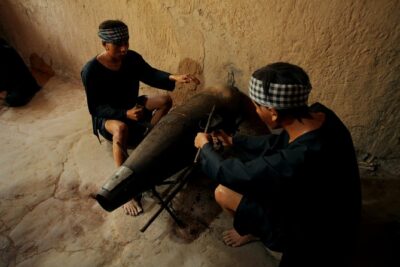
Cu Chi Tunnels and Mekong Delta Full Day Tour – Max 12
Read our review →