
Review · SAIGON WORKSHOPS
Bean to bar Chocolate Workshop in Ho Chi Minh City
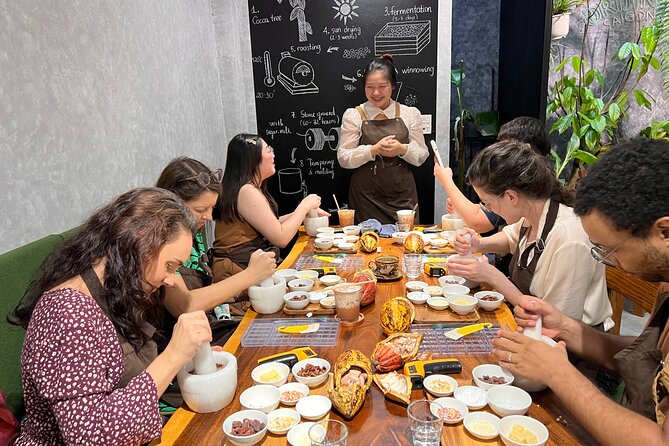
Fresh cacao fruit is the starting point for this hands-on chocolate class in Ho Chi Minh City. At Ban Cacao, you taste the fruit, open cacao beans, grind them with a granite mortar, and turn the ingredients into bars you can wrap and take home.
I like two things especially: you get to handle cacao at several stages, rather than just watch a demonstration, and the class connects chocolate-making with Vietnamese cacao and local ingredients. The small group limit of 10 should also leave room to ask questions and work at your own pace.
One consideration: grinding by hand takes effort, and a participant who attended with an eight-year-old noted that this part was tiring for the child. At about two hours, the workshop is a focused activity, but it is not simply a quick tasting.
- Taste fresh cacao fruit before working with the beans.
- Husk cacao beans yourself, then grind them with a traditional granite mortar.
- Make and decorate chocolate bars to take home, including your own wrapping.
- Learn about Vietnamese cacao and how local ingredients are used in chocolate.
- Plan for a two-hour class at Ban Cacao’s shop in District 1, with a maximum of 10 participants.
- Expect to pay $32 per person; the activity is rated 5 out of 5 from 10 ratings.
From fresh cacao pod to chocolate bar
This workshop gives you a compact, hands-on introduction to making chocolate, with cacao at the center of the lesson. Rather than beginning with a finished bar, you start with a fresh cacao fruit and work through several stages yourself. That shift matters: chocolate is familiar to most of us as a sweet treat, but the class lets you see and handle some of the raw materials behind it.
The instructor explains the pods-to-bars process and shares the history of cacao in Vietnam, including how Vietnamese makers use local ingredients. You’ll hear the context before getting to work, which helps make the practical steps more meaningful. The class is held at Ban Cacao, a Vietnamese chocolate maker that uses local cacao.
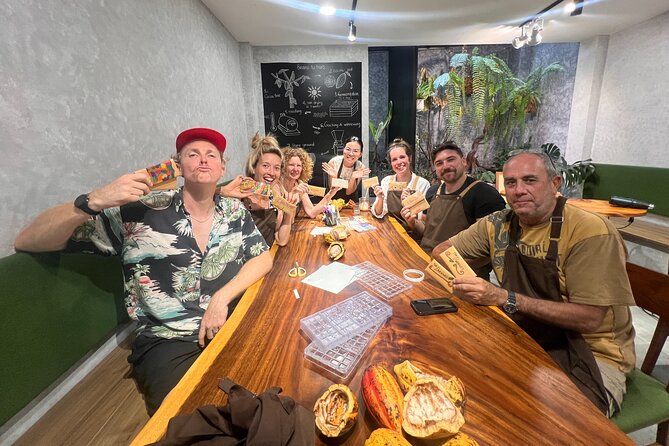
The workshop runs for about two hours. That is enough time for a guided explanation, tasting, hands-on work, and decorating, without taking up most of your day in the city. The group is capped at 10 people, so you are not signing up for a large production-line activity.
Taste the cacao before it becomes chocolate
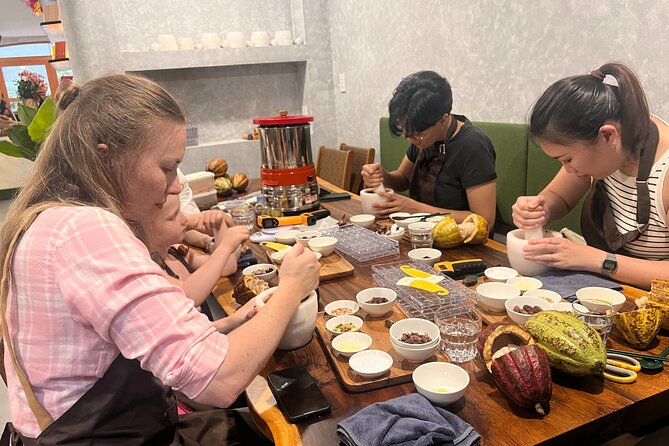
The first taste is fresh cacao fruit. It is a useful opening because it puts the original ingredient in front of you before it has been transformed into the flavor most people recognize as chocolate. You can compare the raw fruit with the beans and other cacao materials used later in the session.
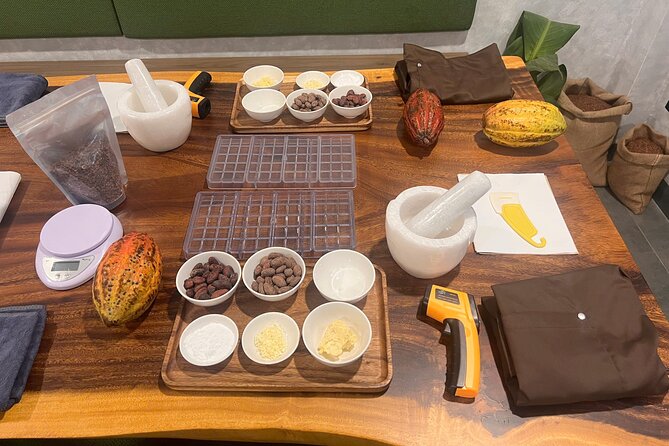
The class also introduces cacao beans, nibs, cacao butter, and cane sugar. Those ingredients show you some of the building blocks used during the workshop. The listed materials do not mean you will spend equal time on each one, but they give you a clearer sense of what goes into the chocolate you make.
This is also where the Vietnamese focus comes into view. The class is not just a generic chocolate-making activity set in Saigon; it includes an explanation of cacao in Vietnam and the use of local ingredients. If you want a short activity that connects a food you know with the place you are visiting, that context adds real value.
More workshops from Ho Chi Minh City:
- Fun & Easy Vietnamese Coffee Workshop in Hồ Chí Minh City
★ 5.0 · 293 reviews - Decadent Vietnamese “Egg Coffee” Workshop in Hồ Chí Minh City
★ 5.0 · 150 reviews - Uniquely Vietnamese Cocktails Workshop in Hồ Chí Minh City
★ 5.0 · 42 reviews
Husk the beans and grind cacao by hand
After tasting the fresh fruit, you husk cacao beans yourself. It is a small task, but it makes the process tangible: you are handling the ingredients, not only hearing a description of how they are prepared. The class then moves to making cacao paste with a granite stone mortar, a traditional method that gives you a more physical sense of the work involved.
That grinding step is the part to prepare for. It can be tiring, especially for younger children, so do not expect every minute of the session to be effortless. The tools also include a thermometer and scale, which show that the workshop combines hands-on traditional work with measured steps.
The activity’s value is partly in this contrast. A finished chocolate bar is easy to unwrap and eat; making one starts with tasks that require patience and effort. You do not need prior chocolate-making experience, based on the class description, but you should be ready to take part rather than sit back and watch.
Shape, decorate, and take home your bars
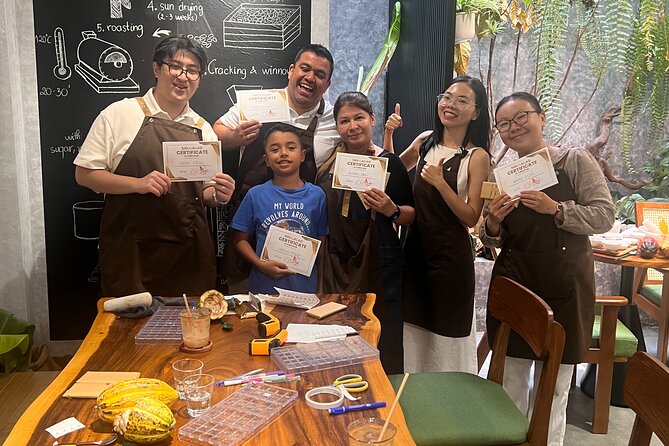
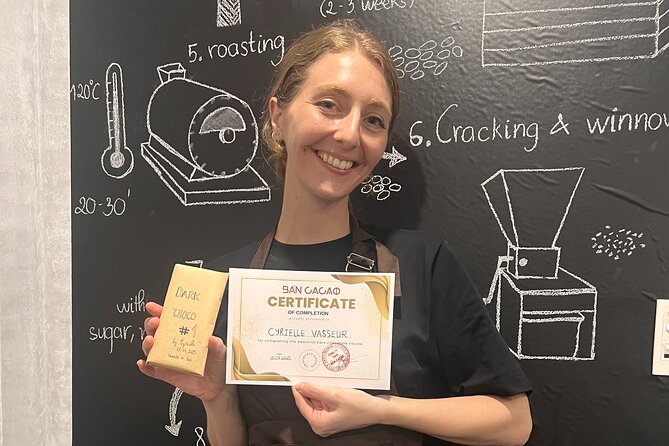
Once the cacao has been worked into paste, you make chocolate bars and decorate them. Molds give the chocolate its shape, while the wrapping paper lets you personalize the bars before taking them home. That final step turns the workshop into a small souvenir-making activity, not just a lesson.
You leave with chocolate you have made yourself. The exact number of bars is not specified in the activity details, so I would not book on the assumption that you will take home a particular quantity. The important point is that making and decorating your own bars is part of the stated class experience.
A hot or iced chocolate drink has also been part of a class experience, with one drink per person. It is not listed among the core materials, so consider it a pleasant possible extra rather than a guaranteed inclusion.
What $32 buys you
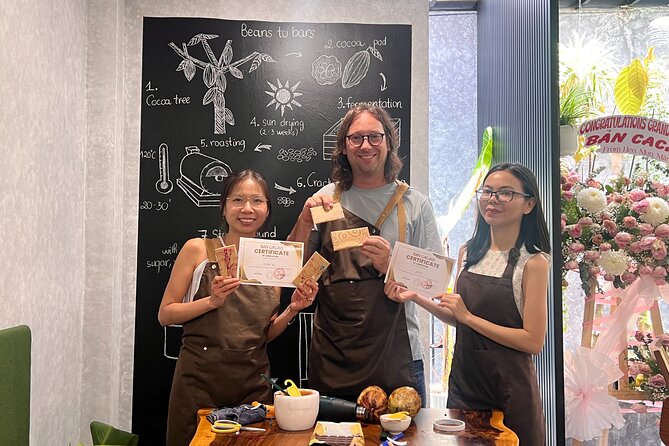
At $32 per person, the price pays for more than a tasting. You get a two-hour class with an explanation of cacao in Vietnam, a chance to taste fresh cacao fruit, several practical stages of chocolate-making, and bars to take home. For someone who likes learning by doing, those parts make the price easier to justify than a short demonstration would.
The group limit of 10 is another point in its favor. A small class can make it easier to follow the steps and get time with the tools, though the details do not specify the exact instructor-to-participant arrangement. If you are deciding between this and another brief food activity, consider whether you want a structured lesson as well as something to taste.
The available rating is 5 out of 5 from 10 ratings, with 100 percent recommending the activity. That is a very positive early signal, but the sample is small. I would weigh it alongside the practical facts: a short duration, a capped group, hands-on work, and a take-home result.
A few more Ho Chi Minh City tours worth a look
- Cu Chi Tunnels Tour from HCM City – Morning or Afternoon
★ 5.0 · 15,833 reviews - From HCM City: Mekong Delta Tour with Sampan Journey
★ 4.5 · 13,132 reviews - Ho Chi Minh City Street Food Tour & Sightseeing By Motorbike
★ 5.0 · 9,413 reviews - HCM: Cu Chi Tunnels-Tapioca Small Group Tour Morning or Afternoon
★ 5.0 · 7,485 reviews
Who will enjoy this workshop most
This is a good fit if you are curious about how chocolate is made, enjoy food-focused activities, or want a break from sightseeing that still connects with Vietnam. It also suits couples, friends, and families who would rather make something together than spend another hour browsing shops.
Children can take part, but age and patience matter. A parent joined with an eight-year-old, and the child found the grinding tiring. The class has been recommended for children over eight, but that is practical guidance rather than a stated age restriction. If you are bringing a younger child, think about whether they are likely to enjoy a hands-on task that takes effort.
It may be less appealing if you want a purely relaxed tasting or a fast stop between attractions. The work is part of the point, and the two-hour format asks you to stay involved through several steps. If you are short on time or simply want to eat chocolate, you can find easier ways to do that.
Getting to Ban Cacao and planning your time
The meeting point is 89/14 Hàm Nghi, in District 1, Ho Chi Minh City. The activity ends back at the same location, which makes it straightforward to plan before or after other plans nearby. The venue is described as being near public transportation, though no specific route or stop is provided.
Allow about two hours for the class itself. The activity is booked, on average, 11 days ahead, so reserve earlier if your schedule is tight. Confirmation is provided at booking, and the ticket is mobile, so you do not need a printed ticket according to the supplied details.
Cancellation is free up to 24 hours before the experience starts. If you cancel later than that, the payment is not refunded, and changes made less than 24 hours ahead are not accepted. The cut-off uses local time, so check the start time and local clock before making a last-minute change.
Should you book the cacao workshop?
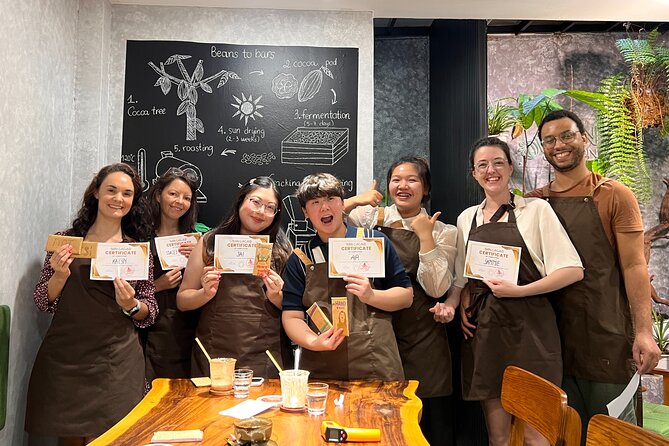
Book it if you want an activity that is both edible and practical. The strongest reason to go is the sequence: fresh cacao fruit, bean husking, stone-mortar grinding, and your own decorated bars. The lesson on Vietnamese cacao gives those steps a local connection, while the small group limit keeps the session from feeling like a large class.
Think twice if you are choosing an activity for a child who dislikes repetitive work, or if you prefer tasting over making. The grinding takes effort, and the class is built around participating. At $32, it is best value for people who will enjoy the process as much as the finished chocolate.
For a curious eater, a chocolate fan, or a family with older children, this is a practical two-hour change of pace in District 1. If that sounds like your kind of afternoon, the hands-on work and take-home bars make it a worthwhile booking.
FAQ
How long is the chocolate workshop?
The class lasts about two hours.
How much does the workshop cost?
The listed price is $32 per person.
Where does the class meet?
It meets at 89/14 Hàm Nghi, in District 1, Ho Chi Minh City.
Where does the activity end?
It ends back at the meeting point.
What will I do during the class?
You’ll hear about the pods-to-bars process and cacao in Vietnam, taste fresh cacao fruit, husk cacao beans, grind cacao paste with a granite mortar, make chocolate bars, and decorate them.
Do I get to take chocolate home?
Yes. You make and decorate chocolate bars to take home. The number of bars is not specified.
How many people can join?
The maximum group size is 10 participants.
Can I bring a child?
A parent attended with an eight-year-old, and the class has been recommended for children over eight. The grinding can be tiring, and no formal minimum age is specified.
Fresh on the list for Ho Chi Minh City
- Private Cu chi Tunnels and Mekong Delta 1 Day★ 4.5 · 6 reviews
- Private Cu Chi Tunnels tour by Luxury Speedboat★ 5.0 · 36 reviews
- Cu chi tunnels Tour (Group and Private)★ 5.0 · 4 reviews
- Private Cu Chi Tunnels and Mekong Delta full day★ 5.0 · 4 reviews
- Private Cu Chi Tunnels Tour Half Day★ 5.0 · 3 reviews
- Cu Chi Tunnels and Mekong Delta 1 Day★ 5.0 · 19 reviews
- Cu Chi Tunnels Private Shore Excursion – Less Tourist Route★ 5.0 · 10 reviews
- Private Cu Chi Tunnels and Mekong Delta: Full-Day Guided Tour★ 4.0 · 29 reviews
Saigon Workshops, compared.
Fun & Easy Vietnamese Coffee Workshop in Hồ Chí Minh City
Read our review →
Decadent Vietnamese “Egg Coffee” Workshop in Hồ Chí Minh City
Read our review →
Uniquely Vietnamese Cocktails Workshop in Hồ Chí Minh City
Read our review →
Coffee Workshop in Ho Chi Minh City: Discover the art of coffee
Read our review →
Browse the lists this tour appears in